
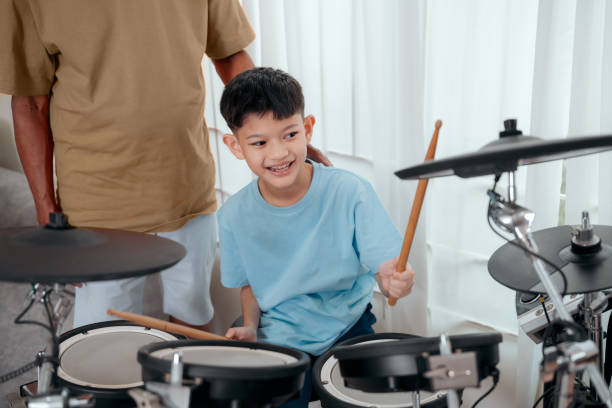
One of the most common frustrations when learning drums is feeling like your hands and feet refuse to work together. Many beginners experience this, even after weeks or months of practice. The problem usually isn’t a lack of rhythm or talent, it’s coordination, which takes time and proper training to develop.
Why Hand and Foot Coordination Feels Unnatural at First

Drumming requires the brain to control multiple movements at the same time. For beginners, this is unfamiliar territory. When trying to play hands and feet together, the brain often prioritizes one limb over the others. This is why the right hand may speed up while the feet fall behind, or why the kick drum feels inconsistent even when the hand pattern seems correct.
Common Coordination Problems Beginners Face
When learning drums, coordination issues usually show up in predictable ways. Beginners often rush the hi-hat or right hand without realizing it, while the bass drum loses consistency. Kick drum notes may feel late or uneven, especially when patterns become more complex. These problems are not caused by weak muscles, but by a lack of movement separation and control.
How Proper Drum Practice Improves Coordination
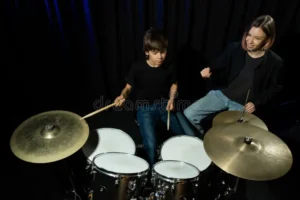
Effective drum practice focuses on separating movements before combining them. This means learning hand patterns and foot patterns individually, then slowly bringing them together at controlled tempos. Slow coordination exercises allow the brain to process each movement clearly, helping hands and feet stay balanced without tension.
How Beginner Drum Lessons Help?

Beginner drum lessons address coordination problems by isolating and rebuilding movement patterns, rather than forcing students to play full grooves too early. Instead of playing hands and feet together immediately, lessons focus on controlling each limb independently, such as stabilising the right hand on the hi-hat while training consistent bass drum placement underneath. This helps the brain recognise and repeat clean movement patterns without tension.
Teachers also identify where coordination breaks down. For example, whether the right hand rushes when the kick enters, or the bass drum loses consistency when the snare is added. Once this point is identified, exercises are adjusted by simplifying the pattern, reducing tempo, or changing the sticking or foot placement. This targeted correction prevents students from repeatedly practicing the same coordination mistakes.
In structured drum lessons, coordination is built progressively, from single-limb control, to two-limb combinations, and eventually full groove integration. This step-by-step approach allows hands and feet to sync naturally over time. For students taking beginner drum lessons, this method creates more stable grooves, better balance between limbs, and a stronger sense of control instead of forcing coordination through speed or repetition alone.
For students who feel stuck or frustrated when learning drums, guided beginner drum lessons provide clarity, direction, and real progress. With the right structure and feedback, coordination improves faster, grooves feel more natural, and playing the drums becomes far more enjoyable and confident.