

Learning drums is more physical than many beginners expect. It requires coordination, control, and body awareness, not just rhythm. When these basics are overlooked, progress feels slow and frustrating. Below are some of the most common technical mistakes beginners make when learning drums and how proper drum lessons help address them.
Gripping Drumsticks Too Tightly

Many beginners hold their drumsticks with too much tension, especially when trying to play louder or faster. This limits finger control and prevents the stick from rebounding naturally off the drumhead. As a result, the wrists and forearms tire quickly, and dynamics become inconsistent. Proper grip technique focuses on relaxed fingers and controlled rebound, allowing better endurance and cleaner strokes.
Incorrect Sitting Position and Drum Setup

Poor sitting posture and incorrect drum setup can affect both technique and comfort. Sitting too low forces the arms to work harder, while sitting too high reduces balance. Incorrect snare height or pedal distance disrupts natural movement, leading to tension in the shoulders and lower back. A well-adjusted setup supports fluid motion and helps beginners play longer with better control.
Ignoring Bass Drum Foot Technique
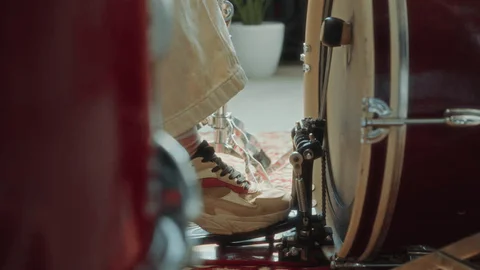
When learning drums, beginners often concentrate on hand patterns and forget that the feet play an equally important role. Without proper foot technique, bass drum strokes become uneven and weak, especially at slower tempos. Learning how to control the pedal using ankle movement rather than full leg motion improves consistency, balance, and overall groove.
Skipping Basic Drum Rudiments

Rudiments are often overlooked because they seem repetitive, but they are essential for developing control. Without practicing single strokes, double strokes, and basic sticking patterns, beginners struggle with speed, evenness, and coordination. Rudiments train the hands to move efficiently and help grooves and fills sound more balanced and controlled.
Practicing Without a Metronome
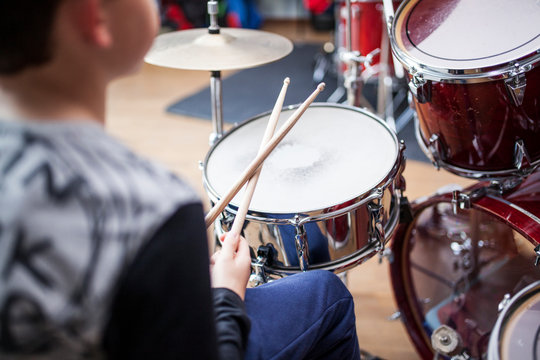
Timing issues are one of the biggest challenges when learning drums. Without a metronome, beginners often rush fills or drag grooves without noticing. Metronome practice builds internal timing and helps drummers understand subdivisions, making their playing more stable and musical, especially when playing with other musicians.
Long Practice Sessions Without Structure
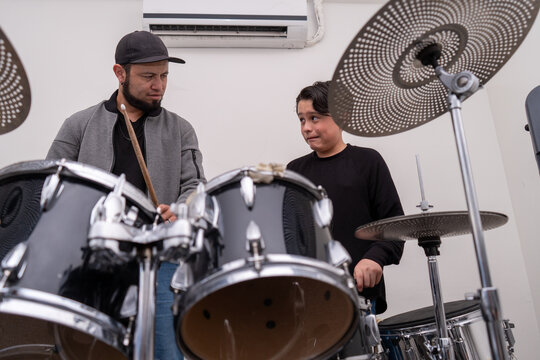
Many beginners believe practicing longer automatically leads to improvement. In reality, unstructured practice often reinforces mistakes. Short, focused sessions that target specific skills such as timing, coordination, or control, lead to faster progress and less frustration.
How Beginner Drum Lessons Help

Beginner drum lessons help by giving students a clear learning order instead of guessing what to practice. Rather than jumping between songs and random exercises, lessons break skills down into grip, posture, foot control, timing, and coordination, taught step by step at the right pace. Teachers can immediately spot issues like excessive tension, uneven strokes, or timing problems that beginners usually don’t notice on their own.
Drum lessons also provide structured practice routines, so students know exactly what to work on and why. This includes how to practice with a metronome, how to balance hands and feet, and how to improve groove before increasing speed. For students taking drum lessons in Singapore, this guided approach helps build strong fundamentals early, making progress more consistent and avoiding habits that are difficult to fix later.